POSH Act for Kerala's Cooperative Banks, Societies, and Federations
Kerala has one of the largest cooperative sectors in India — with thousands of cooperative banks, service cooperative societies, dairy cooperatives, fisheries cooperatives, and federations employing tens of thousands of workers across all 14 districts.
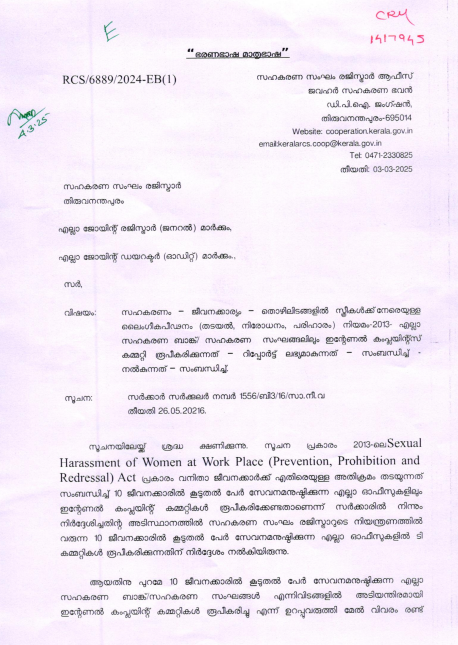
Every cooperative society, bank, or federation with 10 or more employees must comply with the POSH Act, 2013. The cooperative sector is not exempt — and it is one of the most underserved segments for POSH compliance in Kerala.
Does the POSH Act Apply to Cooperatives?
Yes — without exception.
The POSH Act defines "employer" under Section 2(g) to mean any person responsible for management, supervision, and control of the workplace. This includes the managing committee or board of a cooperative society, the CEO or manager, and any person responsible for the establishment's administration.
The Act defines "workplace" under Section 2(o) broadly — including any establishment, enterprise, institution, office, branch, or unit. A cooperative bank's branch office, a service cooperative's processing unit, and a dairy federation's collection centre all fall within this definition.
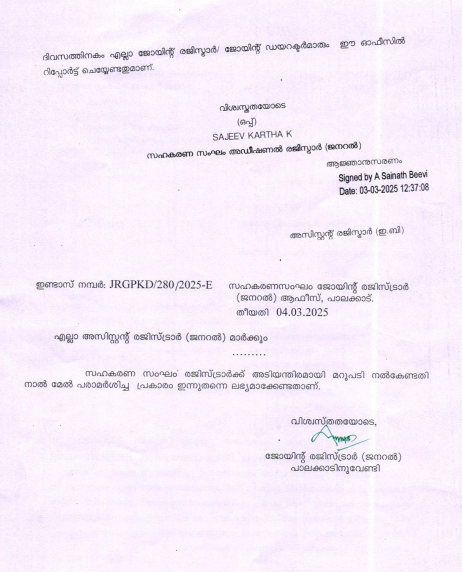
The Registrar of Cooperative Societies, Kerala is the relevant authority for cooperative organisations. POSH compliance is part of the overall governance obligations of registered cooperatives.
Why Cooperatives Are at Risk
Most cooperative staff do not know the POSH Act applies to them. Unlike corporate sector HR managers, cooperative society secretaries and managing committee members rarely receive POSH training. This creates a significant compliance gap — not out of bad faith, but out of lack of awareness.
Women constitute a large part of Kerala's cooperative workforce. Women-dominated sectors — dairy cooperative collection, self-help group federations, and service cooperative retail — employ large numbers of women in settings where awareness of rights is low.
Managing committee members may themselves be respondents. In cooperative societies, the managing committee wields significant authority over employees. When the respondent is a committee member, the IC's independence — and the external member's role — becomes critical.
What Cooperative Organisations Must Do
If you have 10 or more employees:
Form an IC under Section 4 — written appointment order from the authorised signatory
Presiding Officer must be a senior woman employee
At least 50% women members on the IC
One external member from an NGO committed to the cause of women
Display IC details at every office or branch with employees
Conduct annual employee awareness training
File Annual Report with the District Officer by 31 January
Register on Kerala POSH Portal (posh.wcd.kerala.gov.in)
If you have fewer than 10 employees: No IC required. Women employees may approach the Local Committee at the District Collectorate.
FIO Foundation's Cooperative Sector Track Record
FIO Foundation has conducted POSH training for the Kottakkal Cooperative Urban Bank, Malappuram — a session inaugurated by the Managing Director and attended by 40+ employees. This was one of the first formal POSH training sessions for a cooperative bank in North Kerala.
We understand the cooperative sector's governance structure, language needs, and budget realities. Our sessions are available in Malayalam, adapted for cooperative workplace contexts.
📞 +91 99617 71711 | fiofoundation.org | WhatsApp: "Cooperative POSH"
Frequently Asked Questions
Does the POSH Act apply to a small service cooperative with 10 employees?
Yes — the threshold is 10 employees regardless of the type of organisation.
Who is the "employer" in a cooperative society for POSH purposes?
The managing committee or board of Directors, through the secretary or CEO, holds employer responsibilities under the POSH Act.
Do society members count as employees?
Society members who receive remuneration or work regularly in an administrative capacity may be counted. Elected committee members who are unpaid and only attend meetings typically are not employees — but they can be respondents in a POSH complaint.
Can a Kerala cooperative society use FIO Foundation as its external IC member?
es. FIO Foundation is eligible under Section 4(2)(c) as an NGO committed to the cause of women. We have experience with the cooperative sector and can serve as external member for cooperative banks, service cooperatives, and federations.
Book a POSH Training Session
FIO Foundation has trained 6000+ professionals across Kerala. Call +91 99617 71711 or message us on WhatsApp.
💬 WhatsApp Us